


Scaling Renewable Energy with Investment and Environmental Stewardship
Home | Blog | Scaling Renewable Energy with Investment and Environmental Stewardship
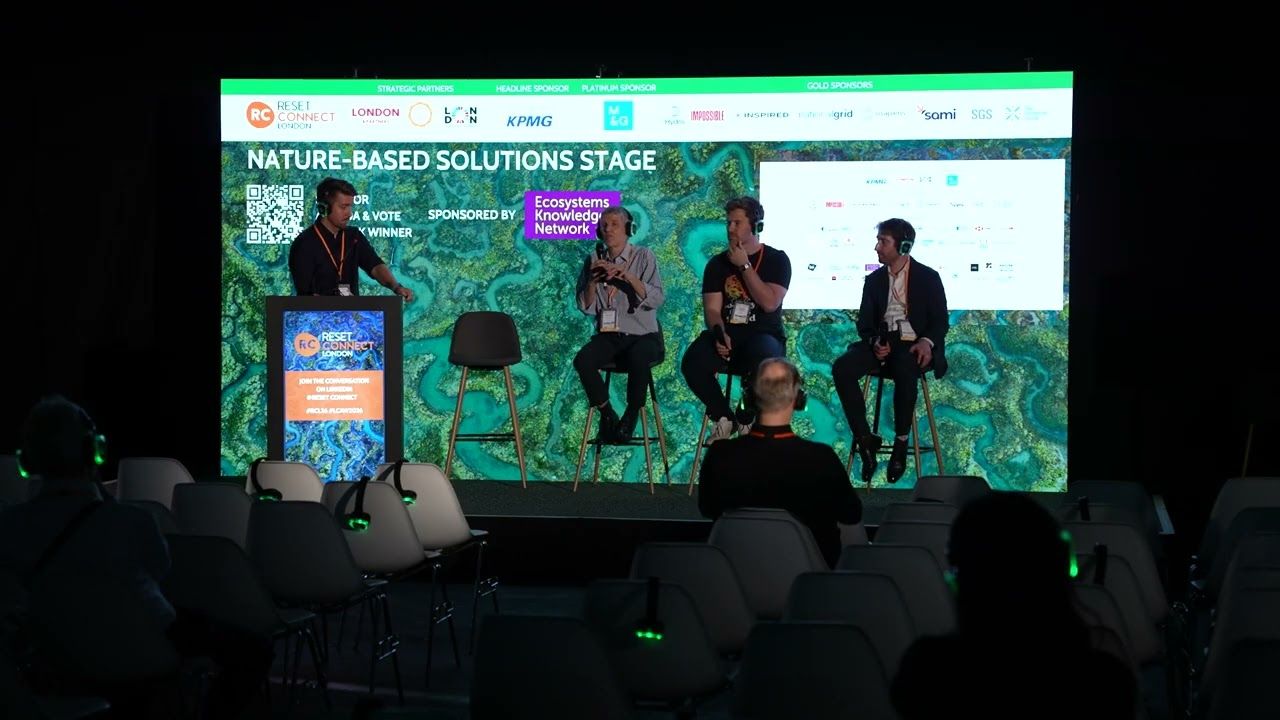
Event: Reset Connect London 2026
Date and stage: 23 June 2026, 16:00–17:00, Nature-Based Solutions Stage
Moderator: Harvie Agnew, Solar Energy UK
Speakers: David Carlin, D.A. Carlin & Company. Dean Cooper, World Wide Fund for Nature. Sebastian Dunnett, United Nations Environment Programme World Conservation Monitoring Centre.
Estimated read time: 5 minutes
Quick Read Summary
- Early site selection can keep projects away from sensitive habitats and give developers more room to respond to ecological evidence.
- Solar farms can support habitat recovery where the site, design and long-term management are suitable.
- Investors and developers need to consider who maintains habitat during operation and who pays when a project reaches the end of its life.
The choices that come before construction
By the time a renewable energy project reaches a planning hearing, some of its most consequential decisions have already been made. A developer has settled on a site, drawn a boundary and made assumptions about how the project will operate. Changing those assumptions can become expensive as the design develops. That is why the panel at Reset Connect London spent so much time on the choices made before an application goes in.
Moderator Harvie Agnew of Solar Energy UK brought together Dean Cooper of World Wide Fund for Nature, Sebastian Dunnett of United Nations Environment Programme World Conservation Monitoring Centre and David Carlin of D.A. Carlin & Company. The discussion ranged from hedgerows around solar farms to the future of the communities that depend on fossil fuel jobs. Across those scales, a practical question kept coming up. How can a project team recognise a conflict early enough to do something about it?
Look at the land before drawing the boundary
Cooper described how energy and conservation specialists can approach the same site with very different information. Developers know where the wind or solar resource is and how a project might connect to the grid. Conservation specialists can identify sensitive habitats and species, while communities know how people actually use the area. Bringing that information together early can help identify where to look in the first place.
He discussed the idea of assessing areas in advance for potential renewable development. A developer could then start its search in an area where biodiversity risks had already received some scrutiny. Individual projects would still need detailed assessment. A regional map can help narrow the search, while field surveys and local knowledge can reveal issues that a map misses.
The approach also depends on who can gather the evidence and act on it. Cooper noted that planning and enforcement capacity varies between countries. A process that works in one jurisdiction may be hard to carry out elsewhere, especially where agencies have limited capacity to assess or oversee projects.
Ask what would happen without the project
Dunnett brought in the idea of a counterfactual. What is likely to happen to the land, habitat or energy system if the project goes ahead, and what is likely to happen if it does not? That comparison matters because the land already has a use and an ecological trajectory. It might be intensively managed, recovering or supporting species that depend on the existing conditions.
Agnew gave a concrete example from solar. Filling gaps in hedgerows or changing the way grass is managed can create better conditions for wildlife on some sites. The value of those measures depends on the starting point, the layout and the management that follows. An existing species-rich site poses a different set of questions from land with few habitats. Looking at the starting conditions also helps a developer explain what improvement means and what evidence would demonstrate it.
Give finance a role before consent
Carlin’s investment perspective brought the discussion back to decisions about capital. Weak assessment can leave risks that emerge later through design changes, objections or litigation. At the same time, the panel distinguished the work required for a good assessment from delays that arise when planning bodies lack the staff to review applications promptly.
For investors, the practical question is when evidence can still change a decision. It can be easier to fund surveys and compare locations before committing to a site. Once a project is moving ahead, the financing case can make room for monitoring, habitat management and the costs of putting commitments into practice. Those provisions matter because the work continues after the project is built.
Plan for the people and the land after generation ends
An audience question brought decommissioning into the discussion. If a solar site has developed valuable habitat over its operating life, what happens when equipment is removed and control of the land changes? Restoration commitments, future land use and responsibility for paying for removal all affect what can be delivered. Agreeing who owns those decisions early gives landowners, developers and investors a basis for planning.
Cooper also asked what the transition would offer people whose livelihoods currently depend on fossil fuel activity. That question widens the meaning of early engagement. A community may want to discuss jobs, land use and the future of the local economy as well as the details of a proposed installation.
Putting it into practice
Start the site search with energy, ecology and local knowledge in the room. Record which sites were considered, what the available evidence says about each one and where fieldwork is still needed. Before investment approval, agree who will fund and deliver habitat management, how outcomes will be measured and what happens at decommissioning. Revisit those commitments if the design, operator or land ownership changes.
Key Takeaways
- Use ecological evidence early enough to influence where a project goes.
- Judge habitat improvements against the site’s starting conditions and likely future without the project.
- Give investors, landowners and communities a clear account of who will manage the site throughout its life.
Quote of the Session
“When it’s well-designed and well managed, it can also support biodiversity recovery.”
Harvie Agnew, Solar Energy UK
Final Thoughts
The panel’s solar example captures why stewardship belongs in project design. A hedgerow can be mapped and budgeted for, but its value for wildlife depends on whether somebody looks after it over the years that follow. The decisions made at the start shape what a renewable energy project can leave behind when it stops generating power.
Speakers and moderator
Harvie Agnew | Solar Energy UK. Agnew works on planning and natural capital policy and described the trade association’s work bringing together biodiversity monitoring from solar farms. Moderator.
David Carlin | Founder, D.A. Carlin & Company. Carlin brought the investment perspective, discussing how environmental assessment and long-term liabilities can affect project decisions.
Dean Cooper | Global Energy Lead, World Wide Fund for Nature. Cooper drew on international experience in renewable energy and discussed how spatial planning and a just transition can inform deployment.
Sebastian Dunnett | Senior Programme Officer, Nature Economy, United Nations Environment Programme World Conservation Monitoring Centre. Dunnett works on the energy transition and brought a biodiversity science perspective on trade-offs and the importance of comparing project alternatives.
Watch Full Session