


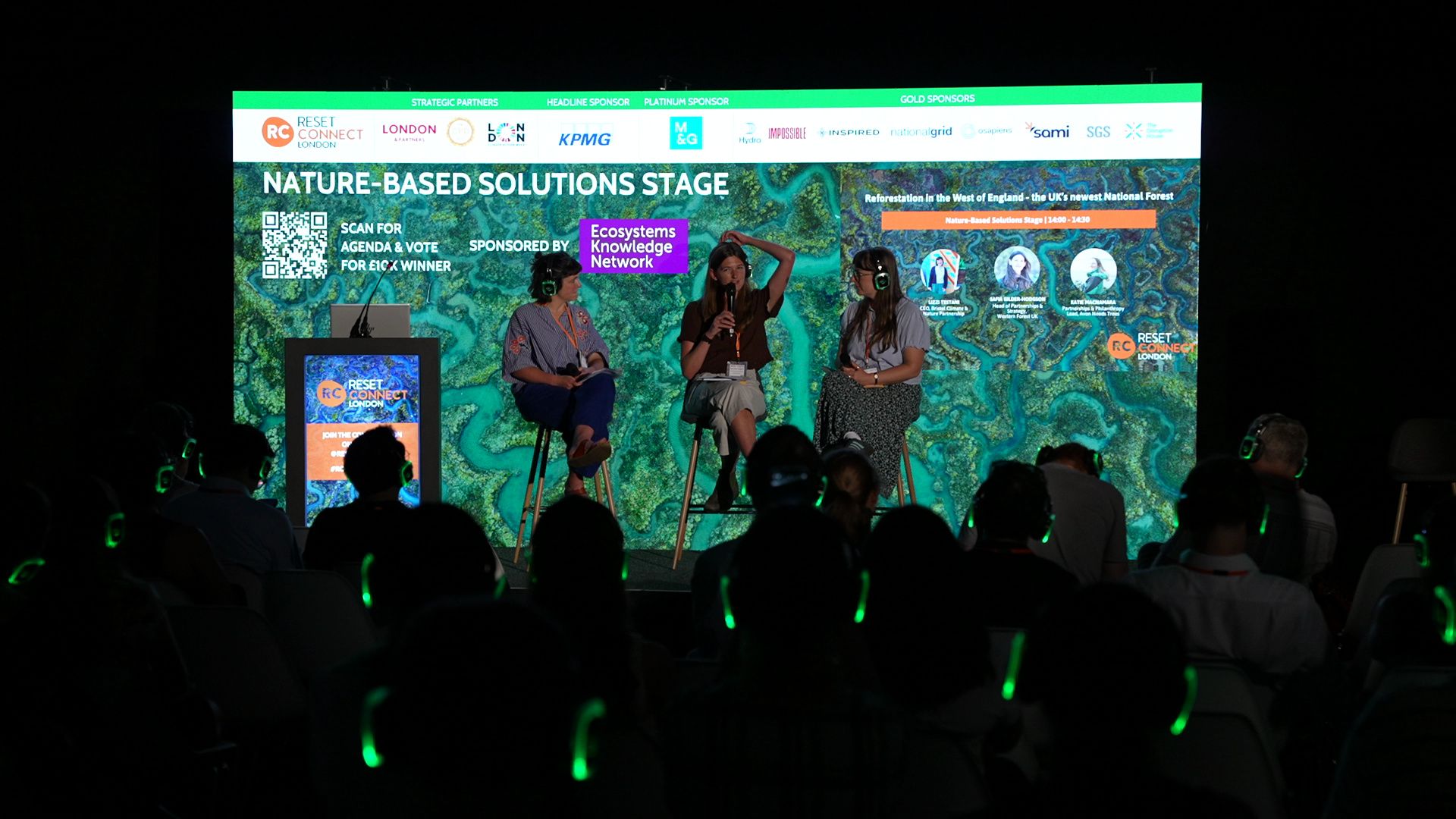
Reforestation in the West of England - the UK’s newest National Forest
Home | Blog | Reforestation in the West of England - the UK’s newest National Forest
Event: Reset Connect London 2026
Date and stage: 23 June 2026, Nature-Based Solutions Stage
Moderator: Lizzi Testani, CEO, Bristol Climate & Nature Partnership
Speakers: Safia Gilder-Hodgson, Western Forest UK. Katie Macnamara, Avon Needs Trees.
Estimated read time: 5 minutes
Quick Read Summary
During a heatwave, Lizzi Testani opened a panel on the Western Forest with a question familiar to anyone walking through a hot city: where is the nearest tree? The answer depends on decisions about streets and neighbourhoods as much as it does on how much woodland a region creates. At Reset Connect London 2026, Safia Gilder-Hodgson and Katie Macnamara explained how the new National Forest is bringing those decisions together across towns, farms and river catchments.
A forest made up of many habitats
Gilder-Hodgson described a landscape that includes patches of woodland, street trees, open grassland, wood pasture and planting along rivers. Each has a different role. Trees near homes and streets can provide shade where people need it. Planting near rivers can help slow runoff, while open habitat supports species that would lose ground under a closed canopy.
The Western Forest’s role is to connect work already taking place across the region. A new woodland can have more value if it closes a gap between existing habitats. Councils, farmers and local delivery groups can use their knowledge of individual sites to decide where those connections make sense. Gilder-Hodgson said the programme had funding for five years to create 2,500 hectares of trees and woodland. She framed that target alongside work to improve existing woodland and involve the people who will look after it.
Build around the farm
Much of the Western Forest area is agricultural, so the programme depends on what farmers can make work on productive land. Gilder-Hodgson described agroforestry as an opportunity to put trees where they help a farm operate, such as providing shade for livestock. The case for planting depends on the farm’s layout, the way it produces food and the costs it can carry while trees establish.
She proposed using farms that have already tried these changes as learning sites. Farmers can see how trees fit into a working business and ask peers what took longer or cost more than expected. That is also a way to identify which kinds of advice and funding land managers need before they commit to planting.
What happens after planting
Macnamara described how Avon Needs Trees buys land to create permanent woodland in the Bristol Avon catchment. At Lower Chew Forest, the charity planted 70,000 trees in the winter planting season discussed on stage. Its plans also make space for grassland, hedges, waterways and orchards. Macnamara described hearing skylarks after changes to land management, a reminder that some of the wildlife the project wants to support needs open ground.
Volunteers help mulch hedges, inspect trees and replace broken stakes and guards. Those jobs take time well after the planting season ends. A project budget therefore needs to cover the years when the trees are most vulnerable and the work is less visible.
Macnamara also described a loan from Triodos Bank that helped the charity buy the farm. The charity plans to repay it through sales of biodiversity net gain units. She presented this as one route to funding land acquisition and restoration. The long-term case also depends on the charity having the resources and responsibility to care for the habitat.
Give communities a say in what connects
Gilder-Hodgson described plans for five corridors linking urban and rural areas, with listening campaigns to ask communities what they want from them. A route between Bristol and Bath, for example, raises questions about how people reach green spaces, where the barriers are and what changes residents would use.
Macnamara said Avon Needs Trees was working to bring people who face barriers to accessing nature to sites near Bristol and Bath. A woodland can be close on a map and still feel out of reach. How people get there and whether they feel welcome are part of deciding where investment will make a difference.
Practical Application
- Map existing habitats and identify where new planting could connect them or provide shade and shelter.
- Ask farmers and residents what they need before choosing sites or designing access.
- Budget for maintenance, monitoring and volunteer support alongside planting.
- Where biodiversity units support financing, check the management commitments and the assumptions behind projected sales.
Key Takeaways
- The Western Forest links woodland creation to farming, river management and urban access.
- Lower Chew Forest shows how a single project can make space for trees, open habitats and food production.
- The success of a planting programme depends on aftercare and the people who can sustain it.
Quote of the Session
“Planting is just the first step.”
Katie Macnamara, Partnerships & Philanthropy Lead, Avon Needs Trees
Final Thoughts
The Western Forest will take shape in decisions about individual farms, streets and riverbanks. Connecting those decisions gives the programme its regional scale. Maintaining the trees and habitats is how that work lasts.
Speakers
Lizzi Testani is CEO of Bristol Climate & Nature Partnership, a network working on climate action and nature recovery across Bristol.
Safia Gilder-Hodgson works on partnerships and strategy at Western Forest UK. At the session she described working with local authorities, land managers and delivery partners across the region.
Katie Macnamara is Partnerships & Philanthropy Lead at Avon Needs Trees, a charity creating permanent woodland in the Bristol Avon catchment.
Watch Full Session