


Becoming Nature Positive: Film Screening and Discussion
Home | Blog | Becoming Nature Positive: Film Screening and Discussion
Event: Reset Connect London 2026
Date and stage: Wednesday 24 June 2026, 15:00–16:00 (London time), Nature-Based Solutions Stage
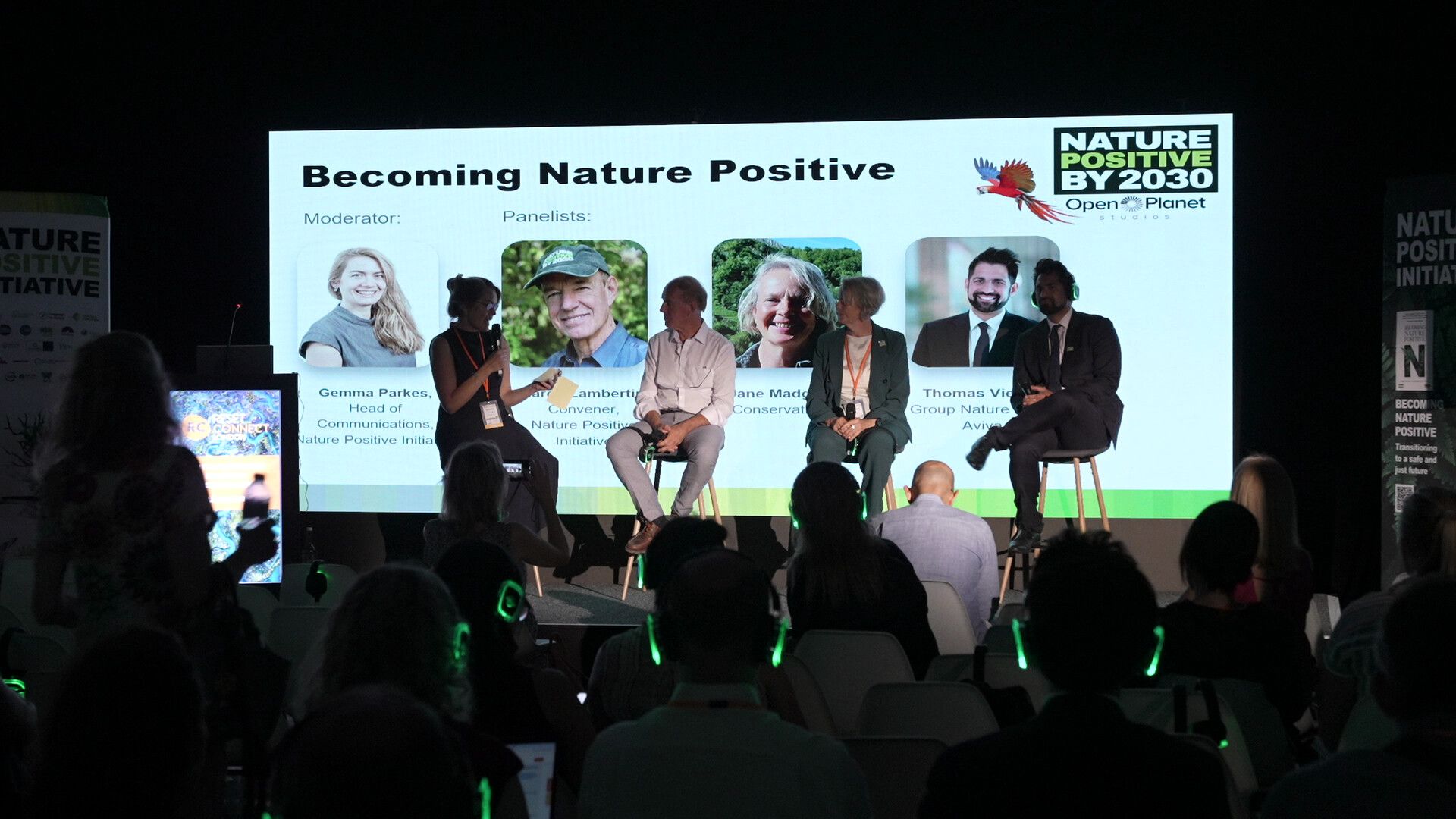
Moderator: Gemma Parkes, Nature Positive Initiative
Speakers: Marco Lambertini, Nature Positive Initiative. Jane Madgwick, Tree Aid. Thomas Viegas, Aviva.
Session sponsor: Nature Positive Initiative
Estimated reading time: 5 minutes
Quick Read Summary
- Becoming Nature Positive asks what it would take to halt and reverse nature loss and why that matters for jobs, health and the economy.
- Jane Madgwick described how communities can use satellite imagery and ecological science alongside local knowledge to guide restoration.
- Thomas Viegas explained how insurers encounter physical risks through claims and why financial institutions need to understand where they depend on nature.
What changes when we recognise what nature does for us
An insurer can see the consequences of physical damage in the claims it pays. For Thomas Viegas, Group Nature Lead at Aviva, that makes insurance an immediate way to understand risks that can feel distant in a boardroom. It was one of the examples raised after the screening of Becoming Nature Positive at Reset Connect London.
Gemma Parkes, Head of Communications at the Nature Positive Initiative, moderated the discussion with Thomas Viegas, Marco Lambertini of the Nature Positive Initiative and Jane Madgwick of Tree Aid. The film, produced by the Nature Positive Initiative with Open Planet Studios, asks what it would take to halt and reverse nature loss by 2030. The discussion that followed brought that global goal down to decisions about land, investment and who gets to make them.
Make recovery part of economic decisions
Marco Lambertini described the film as an attempt to hold two realities in view. Economies still reward ways of producing and consuming that put ecosystems under pressure. At the same time, approaches that protect and restore nature are emerging and need support to spread.
For Marco Lambertini, one reason to move faster is that societies have come to expect services from nature to remain available indefinitely. The loss of functioning ecosystems makes that assumption harder to sustain. It affects the conditions people rely on to live and work, from a stable climate to the natural systems that supply water and support food production. The discussion put those dependencies alongside the value of nature in its own right.
This has implications for how a company judges an investment. A proposal can look attractive on its immediate costs while depending on water, soil or other resources whose condition may change over the life of the project. Understanding those dependencies gives people making investment decisions a clearer picture of what must be in place for their plans to work.
Give communities a say in how restoration happens
Jane Madgwick described how advances in ecological science and technology have changed the work of habitat recovery. Satellite imagery can show changes across a landscape and help identify where action might have the most effect. Local knowledge can help explain what has changed, how the land is used and what people can sustain over time. Decisions about where to act benefit from both.
She also discussed the timescale. Full recovery can take decades, while some landscapes can show visible improvements within a few years. That depends on understanding what caused the damage and involving the people who live and work there in deciding how to put it right. Where those people lead the work, they are also in a position to adapt it as the landscape changes.
Look for risks in the places where they show up
Thomas Viegas explained that Aviva encounters nature-related issues across different parts of its business. As an insurer it sees some consequences of physical disruption when customers make claims. As an investor it also needs to understand how the companies and markets it invests in might be affected. The exposures differ, which shapes what the business needs to measure and where it can act.
He also spoke about growing up in East London with little everyday access to green space. That experience informed his point about education and connection. If people have few opportunities to encounter nature close to home, it can be harder to build an understanding of how it supports their lives. Restoring nature in cities can bring those benefits closer to the people who will help look after them.
Put the film to work
An audience member asked how the film could reach people who make decisions about investment and business strategy. Gemma Parkes pointed to a screening toolkit and invited organisations to host their own events. Marco Lambertini said the half-hour format was designed to leave room for discussion, including at companies’ internal sustainability meetings.
A team hosting a screening could use that time to examine a decision it already faces. A property team might look at where a development could make room for habitat or improve access to green space. An investment team might ask which businesses in its portfolio are most exposed to declining water availability. Both conversations can start with what the people involved already know, what evidence is missing and who can help answer those questions.
Key Takeaways
- Assess how a business depends on functioning ecosystems when making decisions about assets and investment.
- Give communities a leading role in deciding where and how to restore habitats.
- Use a screening to bring colleagues into a discussion about a decision they can influence.
Quote of the Session
“You don’t need to be any kind of expert to make a difference for nature.”
Jane Madgwick, Chair of Tree Aid
Final Thoughts
The audience question about getting the film in front of more decision-makers returned the discussion to something practical. A screening can put a finance team, an operations team and people who know a landscape in the same room. Each can bring evidence the others may be missing. That gives them a place to start when the next decision about a site, a supplier or an investment comes up.
Speakers and moderator
Gemma Parkes | Head of Communications, Nature Positive Initiative. Gemma Parkes introduced the film, moderated the discussion and explained how organisations could host a screening.
Marco Lambertini | Convener, Nature Positive Initiative. Marco Lambertini served as the film’s executive director and discussed why nature recovery needs to shape economic decisions.
Jane Madgwick | Chair, Tree Aid. An ecologist and former Chief Executive Officer of Wetlands International, Jane Madgwick discussed combining community leadership, local knowledge and ecological science.
Thomas Viegas | Group Nature Lead, Aviva. Thomas Viegas described how nature-related risks arise through insurance and investment and discussed the importance of access to nature.
Watch Full Session