


Transforming Business & Re-Engaging Consumers for a Sustainable Future
Home | Blog | Transforming Business & Re-Engaging Consumers for a Sustainable Future
Event: Reset Connect London 2026
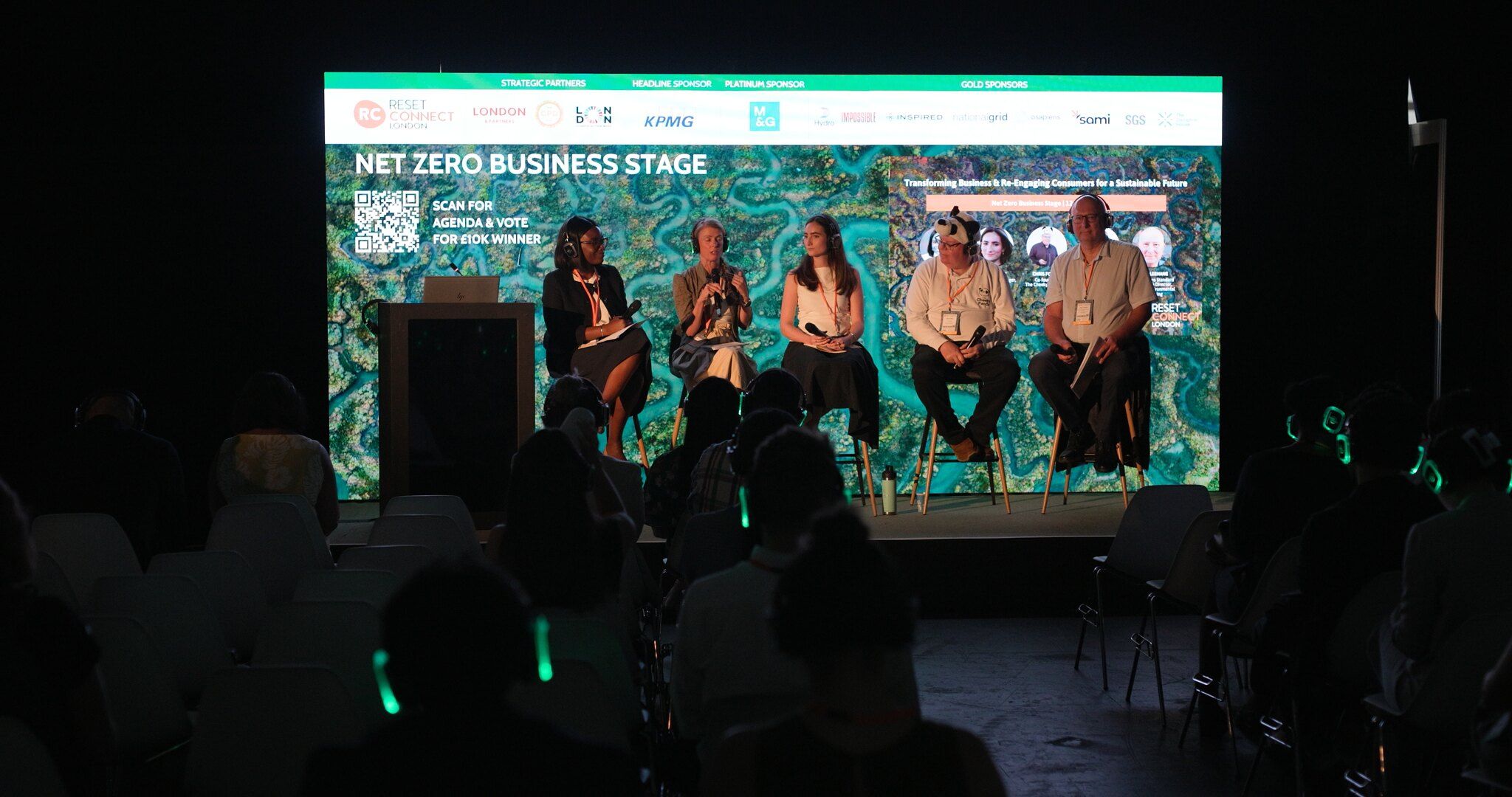
Date and stage: Tuesday 23 June 2026, 12:00–13:00 (London time), Net Zero Business Stage
Moderator: Gbemi Oluleye, Associate Professor in Sustainable Market Mechanisms, Imperial College London
Speakers: Cora Purdy, Sustainability Manager, SURI. Chris Forbes, Co-Founder, The Cheeky Panda. Lisa Ashford, Chief Executive Officer and Director, Ethex. Nigel Leehane, Net Zero Standard Convenor at the International Organization for Standardization and Director, Leehane Environmental Consulting.
Estimated reading time: 13 minutes
Quick Read Summary
A customer who sends back a used toothbrush head is entitled to ask where it goes. An investor wants to know what their money supports. A retailer wants stock delivered on time, even when the quickest route creates extra emissions. These were the decisions behind a discussion about transforming business and reconnecting with consumers at Reset Connect London 2026.
Gbemi Oluleye of Imperial College London brought together Cora Purdy of SURI, Chris Forbes of The Cheeky Panda, Lisa Ashford of Ethex and Nigel Leehane of Leehane Environmental Consulting. Their examples connected sustainability to product specifications, packaging, finance and the responsibilities of people outside a sustainability team.
The session showed how a recovery scheme can become a product customers can inspect, why design and performance still determine whether people buy, and how a growing business can keep its environmental commitments in view when orders and investment arrive. It also raised a harder question about transparency. How much is a company prepared to show when its results fall short?
A Return Scheme Has to Lead Somewhere
Cora Purdy’s account of SURI’s toothbrush-head recovery scheme put a practical test to the language of circularity. Asking customers to return a product creates an expectation about what the business will do with it. The work then lies in arranging collection, identifying a viable process and finding a use for the recovered material.
SURI’s product team starts further upstream. Cora Purdy described bringing designers into contact with recyclers so that material choices take account of what can happen after use. A decision made while specifying a component can determine which recovery processes will be available later. That makes the relationship between design and disposal part of the product’s development.
She discussed toothbrush heads made with plant-derived materials and the company’s request that customers return them after use. For one project, SURI worked with recyclers in the United Kingdom to clean and shred the collected heads, then process the material so it could be moulded into soap dishes. Cora Purdy said each dish used material from 18 toothbrush heads. The resulting object gave the company something specific to show customers who asked what happened to their returns.
Getting there required experimentation. Cora Purdy acknowledged that when the founders began the collection scheme, they had yet to resolve how the returned material would be handled. Her advice was to begin working on the problem and learn through the process. Her account also exposed the burden a business takes on when suitable recycling infrastructure is missing. Somebody still has to arrange the processing, find a manufacturing route and demonstrate that the output has a use.
Chris Forbes described a related difficulty in changing The Cheeky Panda’s packaging. When the business first asked its factory for paper wrapping, it was buying a small volume and was told it had to use plastic. The ambition remained. Once orders had grown, the manufacturer could offer paper packaging, at a higher cost. The company chose to switch and changed an established product line before it knew exactly how customers would respond.
These examples locate change in a series of decisions that purchasing and product teams can influence. A supplier’s initial answer may change with order volumes, equipment or demand from other customers. Cora Purdy also described a supplier code of conduct, assessments and work on suppliers’ own sustainability goals. Those processes help make expectations part of an ongoing relationship, with questions that can be revisited as the business develops.
People Still Need a Reason to Choose the Product
An audience member asked how the panel communicated with people who were not interested in sustainability. It was a useful challenge to a discussion in which most participants already accepted its importance. A company can do substantial work on materials and supply chains and still struggle to persuade somebody to try its product.
Chris Forbes began with quality and price. For The Cheeky Panda, he argued that an appealing product at an acceptable price creates a reason for a first purchase. If the customer prefers using it, there is a reason to buy again. The environmental story can then reinforce a choice that also works in everyday life.
Cora Purdy described several motives among SURI customers. Some care about how the brush looks in their bathroom. Others are looking for a good clean. Some arrive because of its environmental credentials. Those interests overlap, and the brush has to perform whichever motive first attracts a buyer. Her account was candid about sustainability often supporting the purchase alongside other benefits.
The point matters for how a company communicates. A product team needs to understand what people expect to use, while a sustainability team needs to understand the materials and impacts involved in providing it. Marketing has to explain both accurately. Treating the environmental feature as sufficient on its own risks overlooking the reason the customer came to the product category in the first place.
Once people are customers, there are further opportunities to explain the work behind the product. Chris Forbes discussed storytelling through packaging, videos, social channels and commercial partners. For a business selling everyday goods, he connected that communication to repeat purchases and the commercial return on spending on standards and assessments. Showing colleagues how the work affects sales can also make future investment easier to discuss.
SURI’s soap dish project supplied a concrete story for that purpose. The company filmed at the factory, showing returned heads becoming something customers could recognise. Cora Purdy described the pressure of filming a limited production run, with a finite supply of recovered material. The film answered questions about the collection scheme and allowed consumers to see the process. Customers who asked difficult questions, she said, also pushed the business to improve its reporting and performance.
Transparency Includes What Has Yet to Work
Lisa Ashford’s contribution tested transparency in a different market. Ethex enables people to invest directly in organisations and projects with social or environmental purposes. Before an opportunity appears on the platform, she explained, the team examines the financial proposition and the intended impact. What is the organisation promising, how does it plan to achieve it, and what can be measured?
She gave the example of a community energy project developing solar generation on a former coal mine in the Midlands. That connects the use of money to a place and an activity an individual can understand. It also creates questions the platform has to answer about the project’s finances, expected outcomes and proposed benefits to the local community.
Lisa Ashford argued that finance can feel inaccessible to people who do not identify as investors. Complicated language makes that problem worse. Her approach was to explain where the money goes, what the project intends to deliver and what financial return it expects to offer. The description has to be comprehensible enough for somebody to ask informed questions about it.
Some projects can offer a further form of participation through cooperative or community benefit structures. Depending on the organisation, investors may also become members, vote or seek a place on the board. Lisa Ashford described the value of being able to visit a project and see its effects. That kind of relationship can turn a customer into somebody with a continuing interest in how the organisation performs.
Her answer about sceptical consumers extended beyond publishing favourable results. “You have to be radically transparent with your product or service,” she said. That includes a track record, measurement and comparison, but also an account of the places where the company has fallen below its own expectations. Lisa Ashford described including shortcomings in impact reporting, alongside the aspiration and the steps being taken towards it.
The implication for businesses is demanding. A claim needs to survive questions from somebody who can look at the underlying result and return to it later. Making people available to answer those questions helps give the brand a human point of contact. Lisa Ashford’s closing advice was to involve customers in the goals themselves. They can spread the message, but they can also hold the organisation to account.
Growth Tests Whether the Commitment Reaches Every Department
Nigel Leehane described a client with around 110 employees whose approach changed after a shift in senior leadership. He had worked with the organisation for several years and had become discouraged by its progress. New management recognised that customers expected evidence of action on emissions. Department heads began taking responsibility for their own areas, and the finance team supported conversations about the work required.
His example made senior support tangible. A sustainability team can identify opportunities and help assess them, but managers elsewhere control purchasing, budgets and operational decisions. When leadership makes its expectations clear, those colleagues have a reason to treat the work as part of their responsibilities. Nigel Leehane also discussed how demands from customers, investors and other organisations increasingly shape the conditions in which a business operates.
Cora Purdy gave examples of what that means within teams. Marketing colleagues need to understand the materials behind an environmental claim. A commercial team needs to consider freight choices. A creative team arranging a shoot can look at how it sources clothes and accessories. Education becomes more useful when it addresses a decision somebody actually makes in their job.
The question from an insurance professional widened the discussion to services. How can a business without a physical product take similar action? Chris Forbes pointed to its influence over suppliers, including the businesses contracted to carry out repairs. Lisa Ashford emphasised working with other organisations in the sector. A service business still makes purchasing decisions and sets requirements for partners, which gives it places to act across its operations.
As a company grows, those responsibilities can become harder to maintain. Cora Purdy described the pressure of supplying retailers quickly. A business that intends to move stock by sea can find itself considering air freight, with consequences for its emissions goals. Policies and agreed targets give colleagues a basis for discussing the order before delivery pressure determines the outcome.
Chris Forbes connected growth to the terms on which a company raises money. He described investing to expand, then working back towards profitability before taking another step. He also urged founders to examine voting rights and control when choosing investors. Access to capital affects more than how quickly the business can sell additional stock. It can change who has authority over its direction.
Nigel Leehane added another risk. A business may grow faster than its ability to deliver the values that attracted customers. A promising order or investment therefore needs to be considered alongside supplier capacity, recovery systems and the people responsible for reporting the results. The practical test is whether the organisation can keep doing what it has told customers it will do as demand increases.
Practical Application How to Connect Operations and Consumer Trust
Start with a promise the business already makes, then follow the decisions required to deliver it. The panel’s examples suggest bringing the people responsible for design, purchasing, finance and customer communication into that review together.
Questions to ask
- If customers return a product, can we explain where it goes and show what happens to the material?
- Have designers spoken directly to the people expected to recover or recycle the product after use?
- Which benefit makes somebody try the product, and what makes them buy it again?
- Can a customer understand our evidence without knowing the terminology used by our sustainability team?
- Who can approve an exception when an order creates pressure to change freight, materials or suppliers?
- Could the terms of new investment affect the commitments we have already made?
Signals to watch
- Customers repeatedly asking what happens to returns or how a claim was calculated.
- Retail demand growing faster than the supply chain can serve through planned transport routes.
- More decisions about sustainability reaching colleagues who have yet to receive relevant training.
- Suppliers offering new options as volumes increase or other customers ask for similar changes.
Traps to avoid
- Promoting a return scheme before understanding how the collected material will be handled.
- Expecting environmental credentials to compensate for poor performance or an unacceptable price.
- Publishing achievements without explaining the targets the business has missed.
- Allowing urgent sales decisions to bypass the people accountable for environmental goals.
A useful outcome is a promise that can be followed through the business. Teams know who owns each decision, customers can inspect the evidence, and the company has a way to explain exceptions and improvements. The next review then has something concrete to compare with the original intention.
Key Takeaways
The strongest examples connected a customer-facing claim to work that had to happen elsewhere in the company. SURI had to find a processing route for returned heads. The Cheeky Panda had to revisit packaging with its manufacturer. Ethex had to assess projects and make their propositions understandable. Each required coordination beyond the person writing the message.
- Recovery begins with decisions about materials and design, followed by a process for handling what customers return.
- Product performance and price influence whether people try an alternative and continue buying it.
- Evidence of progress becomes more credible when a business also explains its shortcomings.
- Senior management support needs to translate into responsibility within individual departments.
- Expansion plans need to account for operating capacity, emissions goals and the terms of finance.
Quote of the Session
“You have to be radically transparent with your product or service.”
Lisa Ashford, Chief Executive Officer and Director, Ethex
Final Thoughts
SURI’s soap dish is a useful example because it exposes the work hidden inside a simple promise about returning a product. Someone has to collect the heads, arrange cleaning and processing, develop a new object and show that the process happened. Customers see a finished item, while the business has had to coordinate several decisions to produce it.
The unresolved pressure in the discussion was growth. More customers can support investment in better materials or processing, as Chris Forbes’s packaging example showed. More orders can also push a business towards air freight or stretch its ability to deliver its commitments, as Cora Purdy and Nigel Leehane described. Lisa Ashford’s argument for reporting shortcomings matters in that context. Consumers need enough information to understand what has changed and decide whether the company is still earning their trust.
Speakers and moderator
Gbemi Oluleye, Associate Professor in Sustainable Market Mechanisms, Imperial College London. Gbemi Oluleye works across engineering, economics, policy and finance to address barriers to decarbonisation and help organisations assess the commercial implications of sustainability. She moderated the discussion, connecting the panel’s experiences to changes in business systems, operations and consumer engagement.
Cora Purdy, Sustainability Manager, SURI. Cora Purdy discussed the electric toothbrush company’s work on design, supplier relationships and recovery after use. She explained the process behind its toothbrush-head collection and soap dish project, how customers question its claims, and the pressures of expanding distribution while maintaining environmental goals.
Chris Forbes, Co-Founder, The Cheeky Panda. Chris Forbes co-founded the bamboo tissue business in 2016. His contribution covered the company’s shift to paper wrapping, the importance of product performance and repeat purchases, and the financial decisions involved in expansion. He also discussed how a company can influence the requirements it sets for suppliers.
Lisa Ashford, Chief Executive Officer and Director, Ethex. Lisa Ashford leads the direct impact investment platform and is the founder and chair of Energise Africa. Her work focuses on widening participation in finance for organisations with social and environmental purposes. She discussed project assessment, accessible communication, investor participation and reporting where a business falls short.
Nigel Leehane, Net Zero Standard Convenor at the International Organization for Standardization and Director, Leehane Environmental Consulting. Nigel Leehane is a sustainability consultant specialising in environmental management and climate change mitigation, with experience in international standards development. He discussed leadership, responsibility across departments and the need to maintain commitments through periods of growth.
Watch Full Session