


Solving the Complexity Trap: Climate, Nature and the Next Phase of Business Resilience
Home | Blog | Solving the Complexity Trap
Event — Reset Connect London 2026
Date — Wednesday 24 June 2026
Stage — Main Stage Keynote
Speaker — Erin Billman, CEO, Science Based Targets Network
Estimated read time — 8 minutes
Quick Read Summary
A business may know its energy costs and supplier contracts in detail while understanding far less about the river basins, landscapes and ecosystems that keep its operations running. Erin Billman opened her Reset Connect London 2026 keynote by asking what a board would do if it discovered that hidden vulnerability.
The Science Based Targets Network chief executive argued that nature needs the same attention as other material business risks. Her focus was the difficulty of deciding where to act when impacts vary by location and supply chain data is incomplete. Drawing on two anonymised company examples, she explained how science-based targets can help teams agree priorities, connect existing programmes and begin credible action while improving their evidence.
Treat nature as part of business continuity
Billman began with a thought experiment. Imagine a board discovering that much of its long-term value depends on systems it has not fully mapped, risks it has not accurately priced and infrastructure it could not readily replace. The availability of water, the ability of physical assets to withstand shocks and the movement of goods through supply chains all depend on those systems.
For Billman, that describes the position many businesses occupy in relation to nature. She pointed to sourcing disruptions, commodity price volatility and water stress in manufacturing hubs as ways ecological pressure enters commercial decisions. The health of an ecosystem can affect whether a company can keep producing, buying and delivering.
This also changes the scope of corporate climate work. Emissions targets address an essential part of the problem, but Billman argued that climate leadership must also consider the natural systems on which operations depend. A company needs to understand how its activities affect those systems and how their deterioration could affect the business.
Her starting point was therefore a board-level question about continuity and long-term performance. Understanding nature belongs in decisions about sourcing, investment and operations. Leaving it within a separate sustainability programme makes those connections harder to see.
Understand why activity can fail to add up
The obstacle Billman described was often a lack of clarity. A business may already support water stewardship, biodiversity projects, regenerative agriculture pilots and supplier certification. Each can serve a purpose, while the organisation still struggles to explain whether the combined effort addresses its most important impacts.
Nature makes that judgement difficult because location matters. Billman contrasted saving water in a drought-stricken Californian basin with saving the same volume in a rainy Scottish valley. The quantity alone cannot explain the ecological significance. Unlike a greenhouse gas inventory, a single measure cannot capture the full range of pressures on nature.
Long value chains add further uncertainty. Companies may have limited traceability beyond their direct suppliers, inconsistent information across regions and several reporting expectations to navigate. An understandable response is to pursue the initiatives that are easiest to organise or measure.
Billman called this the complexity trap. Organisations can accumulate projects without establishing whether they are acting in the right places or at the scale required. Her challenge was to connect those efforts through a shared basis for prioritisation, so the number of activities does not become a substitute for evidence of progress.
Ask four questions before choosing the response
Billman presented science-based targets for nature as a way to turn a broad concern into decisions. She described SBTN’s work as building on the precedent of climate target-setting through the Science Based Targets initiative, while extending the approach to the different conditions and pressures involved in nature.
The first question is materiality: where is the company causing its most significant impacts? The second is location and urgency: where should action come first, including ecosystems facing the greatest pressure? The third is scale: how much action represents the company’s contribution to addressing the problem? The fourth concerns claims: what evidence provides a credible basis for saying progress has been made?
Those questions give teams a way to compare proposals that might otherwise sit in separate budgets. They also connect an environmental ambition to the information a business needs from its suppliers and operations. A priority should be explainable through both the company’s activities and the conditions in the affected place.
Billman stressed the need to preserve that local detail as information moves towards senior management. River basins, landscapes and farms remain central to understanding the impacts, even when leaders need a consolidated view. A useful overview has to retain the evidence behind the priorities it presents.
Follow a hierarchy of action
Targets also need a clear order of action. Billman described a hierarchy beginning with avoidance, such as preventing the conversion of natural ecosystems. Reducing impacts follows where negative effects cannot be avoided. Restoration and regeneration then address damage, alongside transformation of the business models and systems that create the pressures.
The order matters when a business is choosing between projects. A restoration initiative can have value, but it does not remove the need to examine avoidable damage elsewhere in the value chain. Looking at the hierarchy helps a company ask whether its current programmes address the causes of the problem.
Billman described a structured data pathway that brings separate efforts into a common set of priorities. Its purpose is to align corporate action with ecological limits while allowing decision-makers to track what the business is doing. That requires connections between environmental evidence, procurement choices and operational planning.
The wider implication is that nature action can change how a company operates. Some responses may involve improving an existing process; others may require reconsidering a product, sourcing arrangement or business model. The hierarchy gives those different decisions a place within the same discussion.
Give procurement finance and operations a common basis
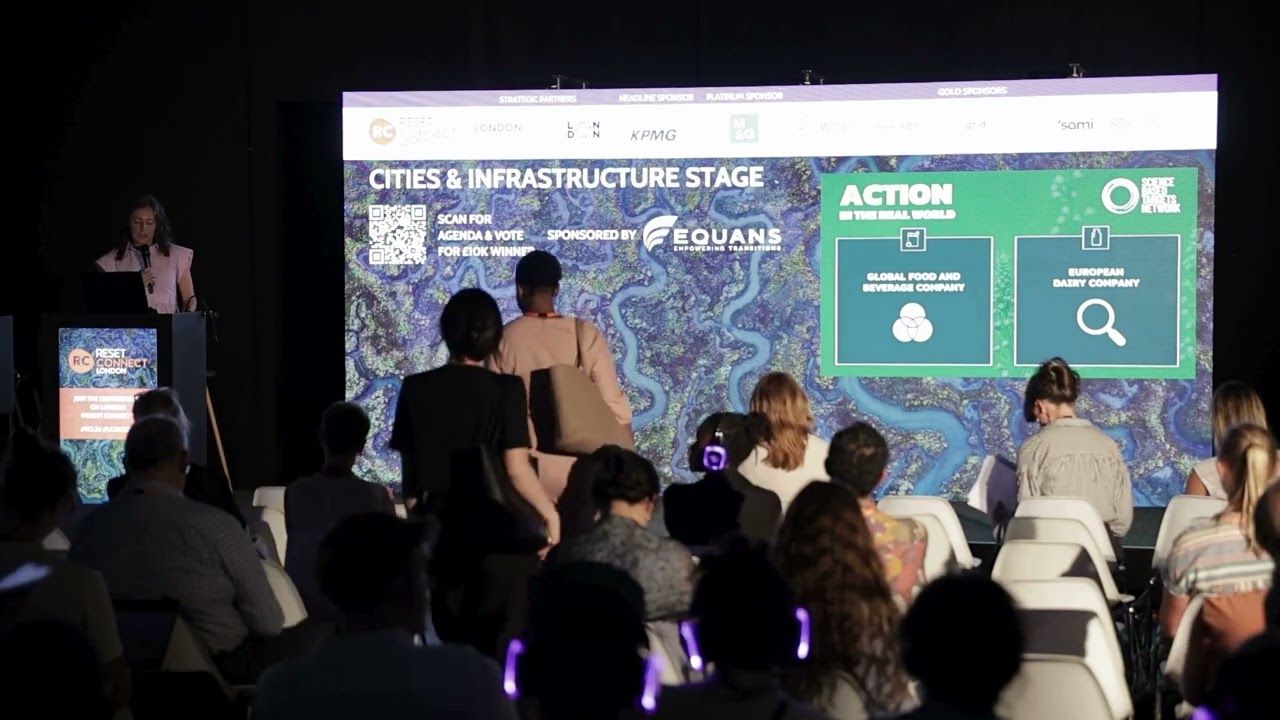
Billman illustrated the approach through two company accounts, which she kept anonymous because of communication sensitivities. The first involved a global food and beverage business that already recognised nature as an issue but needed a way to identify the regions, supply chain stages and raw material risks that deserved attention.
She said SBTN’s guidance helped procurement, finance, operations, senior leaders and investors discuss those priorities using a common language. Supplier data requests became easier to explain because they were tied to a recognised approach. The reported benefit was an improved basis for decisions across functions.
The second example was a European dairy company with a large value chain. Its challenge was deciding where to focus and how to act locally. Billman said the approach helped test its priorities, reduce the risk of directing effort towards the wrong areas and support work concerning biodiversity-sensitive areas and double materiality.
It also provided a clearer basis for discussions with farmers, customers, partners and policymakers. In both accounts, the value lay in making a complex problem usable across the business. Billman did not provide quantified ecological outcomes or financial returns, so these examples demonstrate reported changes in decision-making rather than independently established performance gains.
Begin with a credible scope and improve the evidence
Billman anticipated a familiar objection: a company may lack complete data or visibility across several supplier tiers. Her response was to begin from a credible starting point, use science to prioritise and commit to improving traceability and data over time.
She described accelerated pathways intended to help businesses begin within a defined area while building capacity for broader action. Examples included a business unit, a product line or a geographic area. Another starting point could be a particular environmental realm, such as freshwater, land or ocean, or a segment of the value chain.
The choice still needs to reflect materiality. Readiness can help determine where work begins, but the scope must be clear and the evidence must support the claims being made. Starting with part of the business should create a route towards fuller coverage, with the remaining gaps understood.
Billman closed by connecting this work to strategic opportunity. In her view, businesses that use the best available science and improve as they learn will be better placed to respond to climate and nature pressures. She asked companies to consider how solving those problems could support future value creation as well as reduce risk.
Questions for businesses planning action on nature
The following are editorial prompts drawn from the keynote, rather than a substitute for SBTN’s technical guidance.
Questions to ask
Which products, sites and suppliers depend on vulnerable natural systems? Where are the most significant impacts, and what local evidence supports that assessment? Do procurement, finance and operations agree on the priorities? What can the organisation credibly begin now, and what will remain outside that initial scope?
Signals to watch
Look for priorities changing sourcing and investment decisions, supplier data requests linked to a clear purpose, and progress assessed against local conditions. Track whether the initial scope expands and whether better traceability changes the action plan.
Traps to avoid
Counting projects without testing their relevance can hide important gaps. A company-wide water total can obscure basin-level pressures. A claim about the whole business can exceed the evidence from a limited programme. Waiting for complete information also carries a cost when a credible starting point is already available.
Key Takeaways
Nature dependencies can affect water availability, sourcing and business continuity.
Location and ecological conditions matter when deciding which impacts to prioritise.
Billman’s framework asks what is material, where to act first, how much action is needed and what supports a credible claim.
A common approach can help procurement, finance and operations make decisions together.
An initial programme needs a defensible scope and a commitment to improve evidence and expand action.
Quote of the Session
“Nature is the ultimate infrastructure of business and it’s time we start treating it that way.”
Erin Billman, CEO, Science Based Targets Network
Final Thoughts
The keynote asked businesses to look beneath their operations at the natural systems that make them possible. That work requires local evidence and coordination across functions, particularly where a supply chain stretches beyond the company’s direct view.
Billman’s proposed response was to establish priorities that can be explained, begin where action is credible and improve the evidence as the programme develops. The test is whether that process changes decisions about the places and resources on which the business depends.
Speakers
Erin Billman, CEO, Science Based Targets Network. Billman has led SBTN since its launch in 2020. Her background spans conservation and business consulting, including roles at Blu Skye, Tompkins Conservation and Bain & Company. At Reset Connect, she explained how science-based targets can help businesses address their impacts on nature and improve resilience. Her official speaker biography also records an MBA focused on sustainable business and the environment from Wharton.
Watch Full Session
Watch Erin Billman’s keynote on Reset Connect’s official YouTube channel. Recording length: 15 minutes 19 seconds.