


Keynote - Moving from Ambition to Action - the Next Phase of Corporate Climate Action
Home | Blog | Keynote - Moving from Ambition to Action - the Next Phase of Corporate Climate Action
Event: Reset Connect London 2026
Date: Tuesday 23 June 2026
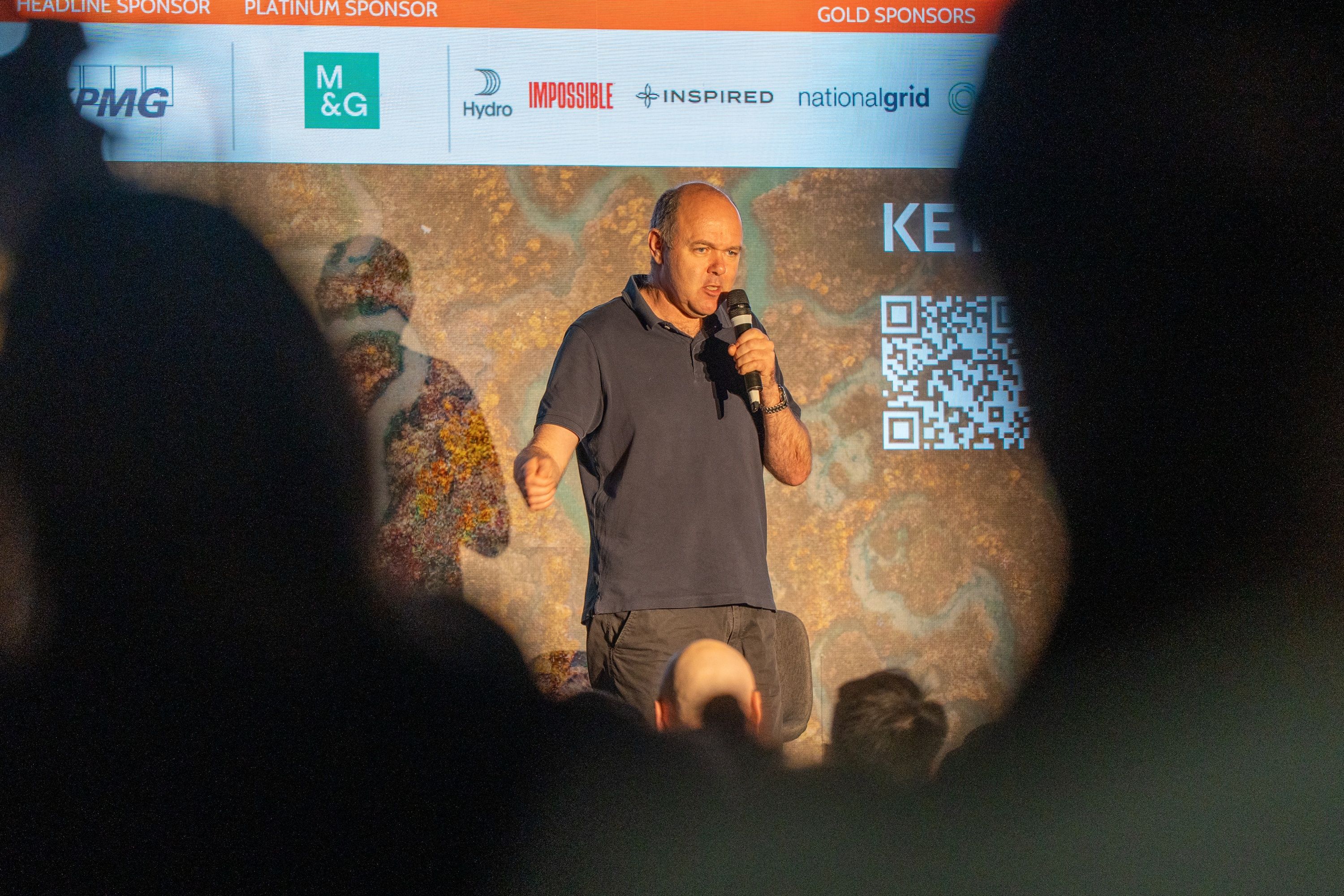
Speakers: David Kennedy, CEO - SBTi
Estimated read time: 8 minutes
Quick Read Summary
This opening keynote set out what has changed in version two of the SBTi's Corporate Net Zero Standard, published two weeks before the event. David Kennedy, CEO of the SBTi, framed the rewrite as a change in what the standard asks of companies: less about the ambition of a target, more about the mechanics of meeting one.
The discussion matters now because the corporate net zero transition is widely described as stalling. Kennedy's counter-evidence was specific, and the rebuilt standard is designed for companies intending to keep going through a period of political pressure and reporting burden.
You will gain a clear view of the three innovations Kennedy prioritised, what now counts towards meeting a target, how the standard treats a target that is missed and whether an existing version one target needs replacing.
The Corporate Net Zero Transition Is Growing, and the Reason Is Commercial
Kennedy opened by contesting the prevailing narrative with numbers. Companies submitting targets to the SBTi for validation have passed 11,000. Between them they account for 30% of global greenhouse gas emissions and 40% of global market capitalisation. Last year was a record, with 3,200 companies submitting targets, and a similar volume is expected this year.
Growth holds across regions rather than concentrating in friendly markets. Some 300 US companies submitted targets last year despite the political climate there. Europe is growing significantly and Asia fastest of all, with momentum across India, China, Japan and South Korea. Early adopters, widely expected to step back at the end of their first target cycles, are renewing instead.
His explanation for that was commercial rather than moral. The world companies will operate in within five, 10 and 15 years will be materially more carbon constrained than today. Resilience and competitiveness both depend on adjusting early, and the standard exists to give companies a structured way to manage transition risks and the opportunities attached to them.
For a commercial reader, this matters because it changes who inside a business owns the work. A framework for managing transition risk belongs with strategy and finance, not solely with a sustainability team.
Version Two Is Built Around Meeting Targets, Not Only Setting Them
The rewrite followed two consultations drawing 2,000 responses, a pilot with 350 companies and 100 members of expert working groups. Kennedy narrowed six innovations down to three for the session.
The first is target-setting method. Companies set ambition on five-year cycles, using methods that differ across scopes one, two and three and that reflect the levers a company actually holds. Kennedy argued the result stays science-based while working across sectors, geographies and company sizes.
The second changes what counts towards meeting a target. Reducing a company's physical footprint remains the priority, and transforming operations and supply chains is still how transition risk gets managed. Under a new implementation hierarchy, though, contributions beyond the supply chain now count towards targets: low-carbon electricity, biogas, sustainable aviation fuels and green commodity certificates.
For sustainability and procurement teams, this is the most immediately practical change in the standard. Market instruments that previously sat outside the target framework now have a defined place inside it.
The Standard Now Accepts That the Transition Is Messy
The third innovation is the one Kennedy spent longest on, and the one most likely to change behaviour. Targets under version two are set on a best-efforts basis, explicitly subject to uncertainties and dependencies.
"It is difficult. It is nonlinear and it is messy," Kennedy said of the transition, describing it as a journey of learning and continuous improvement.
He was equally blunt about what follows. Gaps between performance and target will open, particularly on scope 3, which he called notoriously challenging. The standard asks for transparency rather than concealment. Report progress regularly, name the barriers, set out the response, then realign targets and pathways against the current state.
This addresses a fear Kennedy said companies had raised directly, that missing a target would mean expulsion from the framework. It will not, where a company has done everything within its control and the shortfall comes from factors beyond it. For anyone weighing whether to publish a target at all, this lowers the perceived downside considerably. Reputational exposure from a missed target has been the strongest argument against committing.
Interoperability Is the SBTi's Answer to Reporting Burden
Consultation feedback described a crowded ecosystem. Multiple organisations ask companies for the same information through different channels, using slightly different methodologies, creating confusion and unnecessary work.
The SBTi's response is alignment rather than differentiation. Kennedy confirmed close work with the Greenhouse Gas Protocol and addressed a specific question about whether the new implementation hierarchy had moved the SBTi away from it. It has not. Tim Mohin, the Greenhouse Gas Protocol's first Chief Executive Officer, appeared alongside Kennedy at the SBTi launch event the previous day.
On the net zero standard ISO released for consultation that same week, Kennedy was equally direct. He described it as complementary rather than competing. It is a good standard, well suited to companies yet to engage with the transition. It is also attractive in developing economies, because it allows a net zero year later than 2050 for lower income countries.
For reporting teams, convergence is now the stated direction across all three bodies. Duplicated methodology work has a shorter shelf life than it once did.
Existing Version One Targets Stand, and There Is No Reason to Pause
Kennedy pre-empted the two questions he expected most. Companies holding a version one target for 2030 do not need to scrap it, because every version two innovation will be made available under version one. Companies part-way through setting a target should not pause to absorb version two either, because continuing under version one gives them the same innovations without the delay.
Version one remains available until the end of 2027. Companies then switch across at their next target cycle.
For anyone holding or drafting a target, this is the most decision-relevant point in the keynote. It removes the most common reason for waiting.
Practical Application, How to Turn the New Standard Into Decisions
The keynote's practical value sits in what it removes rather than what it adds. Two common reasons for delay, waiting for version two and fearing a missed target, were both addressed directly. What remains is the work of choosing which levers to use and reporting honestly when they fall short.
Questions to ask
- Which of our scope 3 dependencies sit genuinely beyond our control, and could we evidence that if a gap opened
- Which market instruments are we already purchasing that now count under the implementation hierarchy, and are we accounting for them correctly
- Do we report often enough to realign a target credibly, or would a realignment read as a retreat
Signals to watch
- The implementation guidance due before the end of the year, covering accounting for market instruments, for energy and commodity certificates and for projects - Which carbon programme bodies the SBTi recognises for ongoing emissions responsibility, with ICVCM already present at the launch event and others expected
- Whether the SBTi's new convening work produces usable sector benchmarks rather than another round of reporting
Traps to avoid
- Pausing target-setting work to wait for version two, when version one carries the same innovations and runs to the end of 2027
- Reading best-efforts language as a softening of the standard, when it comes attached to a transparency requirement
- Assuming market instruments substitute for footprint reduction, when the hierarchy places them after operational and supply chain transformation rather than alongside it
What good looks like is a target a company can defend in public and adjust in daylight. The standard now supports both, provided the reporting underneath it is honest enough to carry the adjustment.
Key Takeaways
The session's message was that the corporate net zero transition has moved past the question of whether companies will commit. Validation volumes are rising across every major region, including the US, and early adopters are renewing rather than withdrawing. Version two of the Corporate Net Zero Standard is built for what happens after the commitment, and much of it is designed to remove reasons for hesitation.
- The SBTi has passed 11,000 companies submitting targets, covering 30% of global greenhouse gas emissions and 40% of global market capitalisation
- Companies continue because a carbon-constrained operating environment makes it a resilience and competitiveness decision, not a reputational one
- A new implementation hierarchy lets contributions beyond the supply chain count towards targets, including low-carbon electricity, biogas, sustainable aviation fuels and green commodity certificates
- Targets are now set on a best-efforts basis, and a company that misses one while doing everything within its control stays inside the framework
- Version one targets remain valid to the end of 2027 and carry the version two innovations, so there is no case for pausing target-setting work
Quote of the Session
"We've got these innovations that find a sweet spot between science and the commercial and corporate realities that companies have to operate in."
David Kennedy, CEO, SBTi
Final Thoughts
The underlying argument of the keynote was that a standard only works if companies can live inside it. Version two reads as an attempt to keep credibility intact while removing the conditions that were pushing companies towards silence. Rigid target methods, a narrow definition of what counts and a binary pass or fail on delivery. Whether that balance holds will be settled by the implementation guidance still to come and by which carbon programme bodies the SBTi recognises. The standard has made room for difficulty, and the test now is whether companies use that room to report honestly or to explain shortfalls away.
Speakers
David Kennedy, CEO - SBTi. David has held senior leadership roles across government and professional services, including partner at EY and Director General at Defra, and has over three decades of experience in sustainability and net zero.
Watch Full Session