


Driving Global Regeneration and Resilience Through Investing in Nature
Home | Blog | Driving Global Regeneration and Resilience Through Investing in Nature
Event: Reset Connect London 2026
Date and stage: 24 June 2026, 11:00–12:00, Nature-Based Solutions Stage
Moderator: Kathryn Brown, UK Centre for Ecology & Hydrology
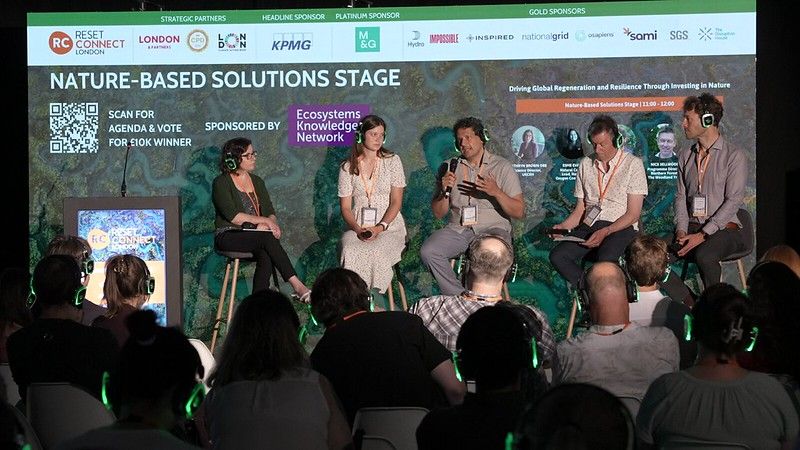
Speakers: Nick Sellwood, Woodland Trust. Esme Evans, Oxygen Conservation. Samir Whitaker, Ørsted. Drummond Lawson, Textile Exchange.
Estimated read time: 5 minutes
Quick Read Summary
- Restoring an upland valley can support several outcomes, including water management, habitat recovery and carbon storage. Each needs its own evidence.
- Growers may face several uncertain seasons when changing how they farm. Buyers and investors can help share that risk.
- Monitoring works best when it is funded from the start and designed around decisions people need to make.
Who carries the cost while nature recovers?
A clothing brand can commit to sourcing fibres from farms that use regenerative practices. The grower still has to work out how to pay for changing those practices and what happens if yields fall along the way. At Reset Connect London, Drummond Lawson described that gap between a buyer’s ambition and a grower’s ability to act. Versions of it surfaced throughout the panel, from restoring upland habitats to monitoring biodiversity around offshore wind.
Kathryn Brown of the UK Centre for Ecology & Hydrology moderated the discussion with Nick Sellwood of the Woodland Trust, Esme Evans of Oxygen Conservation, Samir Whitaker of Ørsted and Drummond Lawson of Textile Exchange. Their examples showed how the terms of an investment can shape the work on the ground, and why the people who manage the land or collect the evidence need to be involved early.
Restore a landscape around how it works
Nick Sellwood described Snaizeholme, a Yorkshire Dales valley within the Woodland Trust’s Northern Forest programme. On land previously managed intensively for sheep, the Trust combined woodland creation, blanket bog restoration and conservation grazing. Working with the local and farming communities helped shape the project.
The valley makes the relationship between the different kinds of work easy to see. Rain moves through the soils and streams as well as across the slopes, so what happens on one part of the site matters elsewhere. Restoring peat and planting woodland serve different ecological purposes. Understanding how water behaves across the catchment can help show how the interventions together affect conditions downstream.
That distinction matters when funders are interested in several benefits from the same site. Carbon storage, habitat condition and changes in runoff are different outcomes. Tracking the work carried out tells a partner what was delivered. Tracking the landscape over time helps establish what changed.
Give early funding a job
Esme Evans described how investment linked to a woodland carbon agreement with Oxygen Conservation helped fund work at the Invergeldie estate in Scotland. The estate’s restoration plans extend beyond woodland creation. Funding also gave the team room to invest in evidence, including detailed mapping and field monitoring, while the habitats were still developing.
Nick Sellwood gave an example of a different reason for an investor to get involved. The Woodland Trust’s partnership with Aviva connects woodland restoration and carbon objectives with an insurer’s interest in understanding flood risk. What the partners learn about the effect of trees and habitat restoration can matter beyond the sites where the work takes place.
The examples make a practical case for discussing early costs openly. Ecological surveys, local relationships and monitoring all take resources before long-term outcomes are visible. If those costs are built into the agreement, partners can make better decisions about the work and explain its progress with greater precision.
Share the risk of changing how fibres are grown
Drummond Lawson described the role of Textile Exchange in connecting the production of raw materials with the brands that use them. A company may know which fibres it buys without having a clear view of the places and practices behind them. Improving that visibility helps buyers see where a change in sourcing might matter for nature.
Growers face a different set of decisions. Reducing reliance on synthetic fertilisers or pesticides can affect costs and yields as practices change. The benefits may take time to emerge, while farm bills arrive every season. Drummond Lawson raised options such as funding from brands, guarantees or finance involving regional development banks. The right arrangement depends on the costs and risks growers face in that region.
Coordinate monitoring where projects share an ecosystem
Samir Whitaker brought an offshore wind perspective to the discussion. Marine habitats can be difficult to observe, and individual projects may be collecting information about the same wider ecosystem. The panel discussed opportunities for industry collaboration on monitoring and on interventions that could have more value if planned together.
Methods such as analysing genetic material left by organisms in water can add information about which species are present. The choice of method still depends on the question being asked. A project team needs to know whether it is establishing starting conditions, detecting change or testing whether an intervention is working. That choice determines when to collect data, which measurements to repeat and how to compare them over time.
Putting it into practice
Define the outcome and the place where you expect to see it. Ask the people delivering the work what it costs to make a change and when they will need support. Agree which results you will track, who will collect the evidence and what findings would lead you to change course. Where projects share a river catchment, growing region or stretch of sea, ask which parts of the work could be coordinated.
Key Takeaways
- Build evidence collection into the funding agreement from the start.
- Share the financial risk with the people who have to change their practices.
- Coordinate projects where their outcomes depend on the same landscape or marine ecosystem.
Quote of the Session
“We need that infrastructure in place to help support all the economic activity.”
Nick Sellwood, Woodland Trust
Final Thoughts
The panel’s examples put different demands on the people providing capital. A grower may need support through several uncertain seasons. A woodland partnership needs time to see what changes downstream. Offshore developers may need to work together to understand what is happening across a shared ecosystem. A credible investment makes room for that work and the time it takes to see results.
Speakers and moderator
Kathryn Brown | Director of Science, UK Centre for Ecology & Hydrology. Kathryn Brown moderated the session, drawing out the connections between evidence, policy and practice.
Nick Sellwood | Programme Director for the Northern Forest, Woodland Trust. Nick Sellwood discussed landscape-scale woodland creation and the role of restoration in flood resilience.
Esme Evans | Natural Capital Lead, Oxygen Conservation. Esme Evans shared how private investment can support estate restoration and monitoring.
Samir Whitaker | Biodiversity Lead, Ørsted. Samir Whitaker discussed the challenges of measuring biodiversity offshore and the scope for developers to work together.
Drummond Lawson | Director of Climate and Nature Impact, Textile Exchange. Drummond Lawson described how fibre buyers can support growers through changes in farming practice.
Watch Full Session