


Closing Keynote: Climate, Nature and the Political Will to Build a Fairer Future
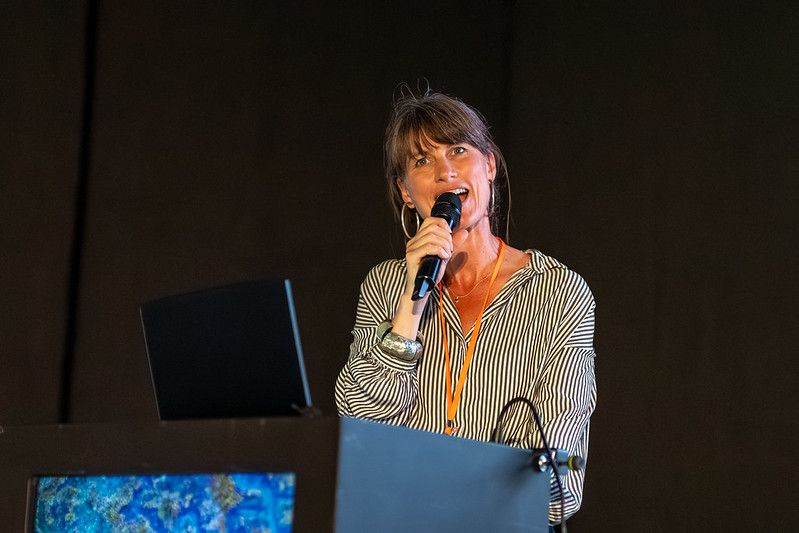
Event — Reset Connect London 2026
Date — Wednesday 24 June 2026
Stage — Main Stage Keynote
Speaker — Rachel Millward, Deputy Leader, Green Party of England and Wales
Estimated read time — 8 minutes
Quick Read Summary
A home that stays comfortable in hot weather, a bus service that helps clean up city air and a job in clean energy can all be part of the same climate conversation. In the closing keynote at Reset Connect London 2026, Rachel Millward asked the audience to connect environmental action with the conditions that shape people’s daily lives.
The Green Party deputy leader drew on her background in the creative sector and her experience at Wealden District Council to argue for a more coherent approach to climate, nature and economic policy. Her speech combined criticism of national political choices with a call for long-term investment and support for local delivery. She closed by asking the conference to keep developing practical ideas and to build the political will needed to take them further.
Begin by imagining a different economy
Millward opened with her experience in the creative sector before entering politics. She described imagination as the ability to picture a different world and then work to bring it into being. That was her starting point for a speech about the response to climate change and nature loss.
The technical questions discussed at the conference remained essential: how to cut emissions, build infrastructure and finance projects. Millward wanted those questions connected to a wider consideration of what the economy should provide. She asked how economic activity could work with natural systems and how the resulting changes could make life fairer.
She recognised that work in the researchers, campaigners and innovators attending Reset Connect. Developing a different way to produce energy, grow food or design a building involves making choices about a future that does not yet exist. Her argument placed those practical efforts within a broader political task.
That opening also set the tone for the conclusion. Millward returned to imagination as something sustained through building, testing and sharing ideas. The capacity to propose a different future mattered to her because it gave people a reason to organise and invest in changing the present.
Make protection from heat a practical priority
The speech moved quickly from that wider vision to the conditions people face during hot weather. Millward focused on homes, classrooms, workplaces and care settings, asking how public policy could better protect the people using them.
She set out the Green Party’s call for a programme of home insulation and heat protection, cooling measures in hospitals, schools and care homes, and a maximum workplace temperature. These were proposals she advocated in the keynote, rather than measures presented as already in force.
Her emphasis was on the relationship between climate policy and everyday safety. A building’s condition affects what happens inside it during extreme temperatures. A workplace or public service needs to remain usable as conditions change, and its occupants may have very different resources to protect themselves.
That makes adaptation a question of delivery as well as ambition. Millward’s examples directed attention towards the buildings people already depend on and the public decisions that determine whether they are improved. The keynote did not supply a detailed technical specification or funding model for those changes, but it made their social purpose clear.
Connect nature recovery with security and living costs
Millward argued that separating environmental policy from economic and security concerns misrepresents how those issues interact. In her account, the ability to feed people, maintain reliable energy supplies and reduce instability depends in part on the health of natural systems.
She referred to a UK national security assessment of biodiversity loss and ecosystem collapse as evidence that nature should be taken seriously within resilience planning. The published assessment examines how environmental degradation could affect food, water, health and supply chains, with wider consequences for security and prosperity.
The keynote also connected that national discussion to the functions ecosystems perform. Millward highlighted water filtration, soil stability, climate regulation and the foundations of food production. Her argument was that protecting those functions belongs within decisions about how the economy operates.
This matters to the cost-of-living discussion because environmental and economic pressures can reach the same household. Energy costs, food security and exposure to heat cannot always be addressed through separate policy conversations. Millward’s proposed direction was to assess climate and nature action through those relationships, including the protection it could offer people over time.
Give local delivery consistent national backing
Drawing on her experience at Wealden District Council in Sussex, Millward described efforts to restore habitats with the Wildlife Trust and retrofit homes within limited budgets. She presented these as examples of local authorities trying to meet community needs while working within financial and legislative constraints.
Her account brought the discussion down to the relationship between national ambition and local capacity. Councils can identify projects and build partnerships, but the funding and rules within which they operate affect how much they can deliver. Millward called for national government to make it easier to extend that work.
She also challenged the coherence of decisions taken across different policy areas. In the keynote, she questioned how local efforts to restore rivers or improve the built environment could be sustained when other decisions continued to create environmental pressures. The concern was whether public policy supported the same direction across institutions.
For the businesses and project teams listening, this was a point about the conditions around delivery. Long-term programmes need confidence that funding and policy support will continue. Millward criticised delayed targets, interrupted schemes and commitments she considered underfunded, arguing that this pattern limited the gains communities and businesses could make.
Explain what investment changes for households and workers
Millward used a series of examples to explain the benefits she wanted climate investment to deliver. Retrofitting homes, she argued, could reduce families’ exposure to volatile energy markets. Investment in public transport could improve air quality and public health. Accelerating the energy transition could create employment in communities needing new opportunities.
The quality of that employment formed part of her argument. She called for well-paid jobs supported by trade unions, linking the transition to whether workers have a meaningful stake in the future. The benefits she described concerned both the infrastructure being built and the circumstances of the people involved.
She placed nature restoration within the same investment agenda. Protecting rivers, soils and ecosystems meant protecting the systems on which other economic activity rests. That connected environmental work with the wider case she was making for security and long-term prosperity.
Millward also cited Spain, Denmark and Portugal as examples of countries making sustained political choices to invest in renewable energy. She used them to argue for consistency and scale. Her comparison was a political case for investment; the keynote did not provide a detailed comparison of household tariffs, market design or the different countries’ energy systems.
Turn hope into support for sustained action
The speech contained direct criticism of the government’s approach and of political opposition to climate policy. Millward questioned the influence of fossil fuel interests and argued that households, workers and businesses would bear the consequences of delayed action. Those criticisms were part of her political contribution to the conference.
Alongside that critique, she acknowledged progress in UK renewable electricity and argued that the country could go further. Her emphasis was on leadership willing to consider future generations and make decisions that endure beyond immediate political pressures.
In closing, Millward described hope as something grounded in the capacity to adapt, restore damage and develop better ways of doing things. She recognised the work already being carried out by the people in the room, including the ideas they were testing and the knowledge they were sharing.
The final appeal connected that practical work to political support. She asked the audience to continue imagining, building and restoring, while helping create the conditions for wider action. Her closing message was that the present situation does not set the limit of what can be achieved.
Questions for organisations delivering climate and nature projects
These editorial prompts translate themes from the keynote into questions for project planning.
Questions to ask
What will this project change for households, workers or users of a public service? Which climate risks does it address, and who is most exposed? What national funding or policy support does delivery depend on? How will the team explain the benefits and the costs in terms people can assess?
Signals to watch
Look for funding that supports work beyond a short pilot, cooperation between councils and delivery partners, and evidence that a project responds to local needs. Assess whether investment improves buildings, services or employment conditions as well as meeting an environmental objective.
Traps to avoid
A broad promise of green growth can leave its effects on households unclear. A local initiative can struggle if wider policy sends inconsistent signals. International examples also need context before being used to promise a particular saving or outcome in the UK.
Key Takeaways
Millward connected climate and nature action with public health, living costs, employment and security.
Her heat protection proposals focused on homes, workplaces and essential public services.
Local delivery was central to her case for consistent national funding and policy support.
She argued that the benefits of investment should be visible in people’s daily lives and working conditions.
The keynote closed with a call to support practical innovation through sustained political will.
Quote of the Session
“The world as it is, is not the world as it has to be.”
Rachel Millward, Deputy Leader, Green Party of England and Wales
Final Thoughts
Millward’s closing keynote asked the audience to connect what they were building with the future they wanted people to experience. The examples were concrete: homes better able to cope with heat, public transport that supports health, worthwhile employment and natural systems capable of supporting the economy.
She also made the case that technical progress needs political support to reach more people. For the organisations leaving Reset Connect, her challenge was to keep developing and sharing practical solutions while asking whether the funding, rules and leadership around them would allow those solutions to grow.
Speakers
Rachel Millward, Deputy Leader, Green Party of England and Wales. Millward delivered the closing keynote at Reset Connect London 2026. She drew on her earlier work in the creative sector and her experience of council leadership at Wealden District Council to discuss climate adaptation, nature recovery and public investment. Her contribution focused on how environmental action can improve everyday life and the political support needed for local delivery.
Watch Full Session
Watch Rachel Millward’s closing keynote from Reset Connect London 2026. Recording length: 12 minutes 54 seconds.