


The AI Powerhouse: Building the UK’s Green Data Future
Home | Blog | The AI Powerhouse: Building the UK’s Green Data Future
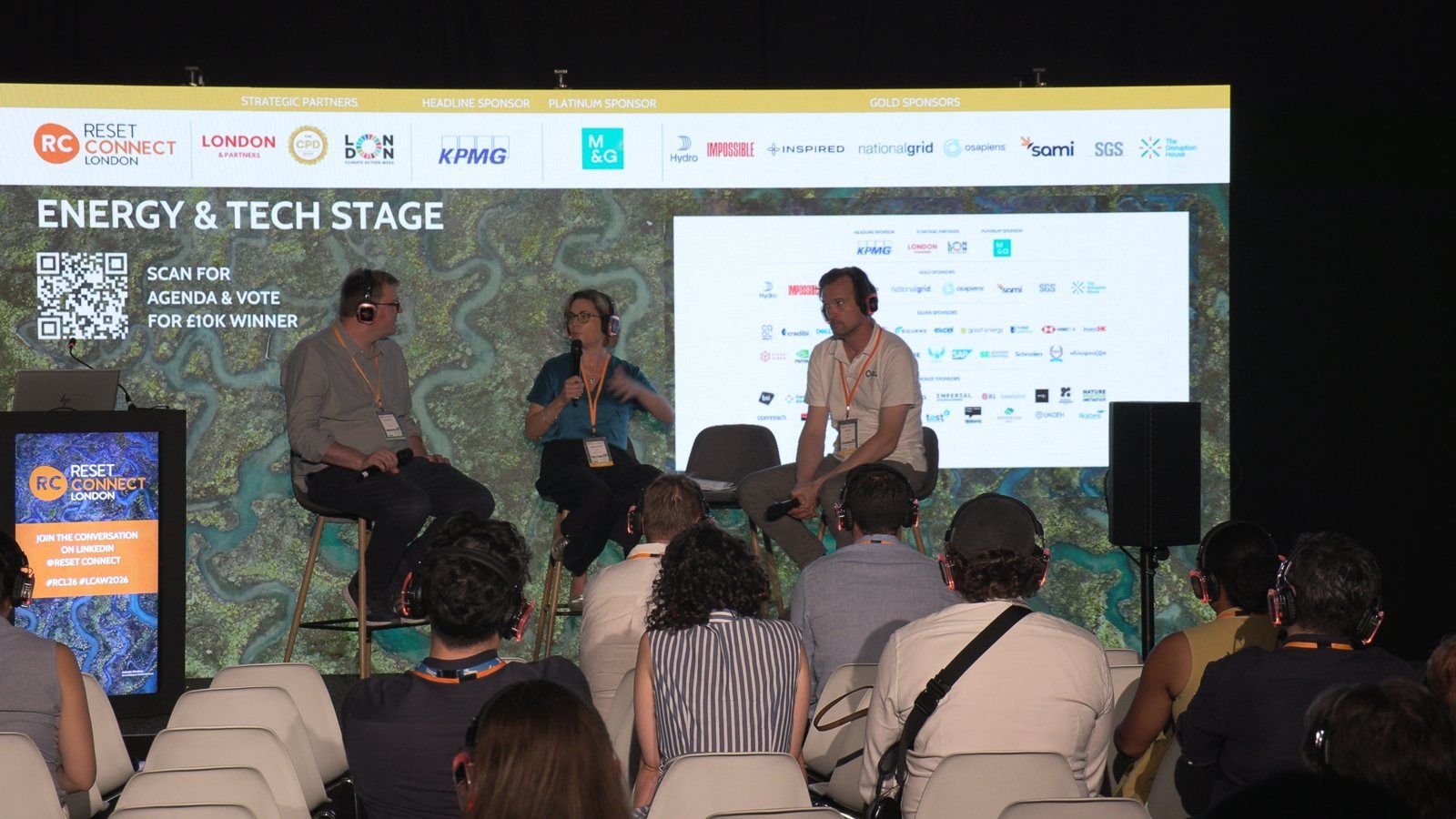
Event Reset Connect London 2026
Date Wednesday 24 June 2026
Stage Energy & Tech Stage
Moderator Craig Melson, techUK
Speakers Sophie Ashcroft, Stevens & Bolton. Lewis Richards, Microsoft. Mark Lee, Deep Green.
Estimated read time 10 minutes
Quick Read Summary
A data centre needs a site, a power connection and a way to remove heat from its servers. The choices are connected. A site near customers may be attractive for services that need a fast response, while one close to a heat user offers a chance to put that heat to work. The project still needs enough electricity to operate.
On the Energy & Tech Stage at Reset Connect London 2026, the panel explored how those choices affect where the UK can build data centres and what communities can expect from them.
Start with what the computing workload needs
The panel distinguished between large, concentrated computing workloads and services that depend on a fast response close to the user. A workload that can tolerate a longer response time gives the developer more flexibility over location. One that needs to respond quickly may narrow the search.
That distinction changes which sites deserve a closer look. A remote location can work for some workloads, while others may justify a site closer to demand despite tougher competition for space and power.
Mark Lee described what he saw as a market developing at two speeds. One part is driven by large language models and demand for substantial computing capacity in a single location. Where the work can run continuously and does not require an immediate response to a person nearby, developers have more scope to look for sites around power availability. The other part consists of smaller facilities closer to population centres. Lee used services on a phone as an example of why proximity can matter when people expect a near-instant response.
That distinction gives a site-selection team something concrete to ask of its customer. What happens if a request takes longer to return, and how often does that matter? A business may be able to place some work further away while retaining capacity close to users for time-sensitive services. Lee’s distinction was about the work the facility is expected to do. It gives the team a way to judge the value of proximity before paying for a site where power or land may be harder to secure.
Test the power connection early
Land and planning permission are only part of the development decision. The site also needs a power connection with enough capacity, available on a timetable that works for the project. A promising plot can become difficult to use if the connection arrives years after the intended opening.
Grid capacity and the expected connection date should be compared while sites are still being shortlisted. That gives developers a chance to reconsider the scale or phasing of the project while they still have options.
The panel’s contrast between large centralised sites and smaller facilities near users also has consequences for power. A single large facility needs a correspondingly large supply at one location. Smaller developments can be considered across more locations, but the power available at each still has to match the computing it will support. Lee also discussed developers looking at off-grid supply where it can make a site viable. That introduces a separate set of questions about the source, price and emissions of the electricity.
A connection date also needs to be read alongside the development programme. If the first stage of the site can operate with a smaller supply, the team can assess what that stage would deliver and what would have to wait. A plan that assumes all capacity will be available on opening day has less room to respond if the timetable slips. Writing down those dependencies makes it easier to see whether two sites with similar headline capacity actually offer the same opportunity.
Make planning commitments specific
The panel discussed how grid impacts, water use and planning conditions can shape a proposal. A general commitment to sustainability leaves a planning authority with little to assess. A clear proposal explains how the site will operate and what the developer can deliver.
The distinction matters when a benefit depends on another organisation. If a project proposes supplying heat to a neighbouring building or network, the proposal should make clear who would take the heat and what infrastructure needs to be in place.
Sophie Ashcroft brought the planning perspective to a discussion that ranged from grid impacts to water and the conditions attached to consent. The panel drew attention to the distance between an environmental narrative submitted with an application and a commitment that can be reflected in the planning decision. A claimed benefit is easier to examine when the proposal identifies who will deliver it and how its delivery will be assessed.
Heat reuse provides a worked example. The developer can explain how it intends to capture heat and which buildings or network could take it. The potential customer may have a different construction timetable or may need equipment of its own. If those arrangements are still being discussed, that status matters to anyone deciding how much weight to give the benefit. It also matters to the operator that will inherit the promises made during development. The same discipline can be applied to the cooling design by describing the expected water use and identifying the conditions under which it might change.
Ask what the cooling system uses
The discussion considered cooling alongside electricity use. The choice of equipment affects how much water a facility needs on site and how much energy it uses to keep servers within their operating limits. Those questions matter when comparing sites with different local constraints.
The panel also raised indirect water use. A useful comparison makes clear which water and energy use the figures include, so that a claim about the cooling system can be understood in context.
The panel floated a comparison with the energy performance certificate used for homes. A data centre equivalent was raised as a proposal to help people compare features such as closed-loop cooling and power usage effectiveness, or PUE. PUE compares the total energy used by a facility with the energy used by its computing equipment. It can help explain how much additional electricity goes to running the building and cooling the servers. Water use is a separate question that a PUE figure alone cannot answer.
The comparison also depends on what the figures cover. A cooling system may have low direct water use on site, while the electricity or other services it relies on may involve water elsewhere. The panel raised that distinction when it discussed indirect use. For a planning or procurement team, it helps to put the design assumptions next to the metric, including what is included in the calculation and how the facility is expected to operate. That gives readers a way to compare the proposed designs without treating a single efficiency number as a complete environmental assessment.
Find a customer for the heat
Mark Lee described Deep Green’s approach of starting with heat reuse and looking for partners that can use the heat generated by the servers. Location matters because heat needs a route to a customer, and the customer needs a supply that matches its own requirements.
That means checking when the customer needs heat and what equipment would be needed to deliver it. Finding a nearby user early can shape the site design, the connection between the two facilities and how each partner plans to operate.
Lee named a Manchester site and said Deep Green was building another in Bradford at the time of the panel. He also discussed district heating as a way for a data centre to supply heat locally. That puts the heat user into the development decision from the start. A site with a potential customer next door presents a different proposition from one where the heat would have to travel further or wait for a network that has yet to be built.
A practical assessment starts with the two operating schedules. Servers can produce heat while a customer’s demand varies over the day or year. The developer and customer need to understand when their requirements overlap, what temperature the customer needs and what equipment could bridge the gap. They can then work out who would pay for the connection and what would happen when either facility was unavailable. The article treats Manchester and Bradford as examples Lee cited on stage. It leaves the status of individual heat agreements for separate verification.
Show what the development means locally
For people assessing a proposed site, the practical questions include what the facility will draw from local infrastructure and what it can provide in return. A proposed heat connection is easier to evaluate when the customer, route and delivery timetable are clear.
The panel’s examples show why two data centres of similar size can have different effects. The workload, cooling design, grid connection and opportunities for heat reuse all depend on the site.
Later in the session, the discussion widened to the relationship between AI growth zones and heat network zones. The panel raised the prospect of considering them together, so that a location being assessed for computing capacity could also be considered for its potential contribution to a heat network. The opportunity depends on whether the relevant sites, customers and timetables can be made to work together.
There is a concrete question here for public authorities. If a site is being promoted for data centre investment, which part of the local energy plan has already allowed for the electricity it will need? If heat reuse is being proposed, which organisation is responsible for building or extending the network that will take it? A council or developer that can answer those questions can explain the project’s local consequences in terms people can examine, including what is confirmed and what still depends on another investment.
Practical Application
Compare shortlisted sites on four points before committing to one. Identify the workload and its latency requirements, check available power and connection timing, document cooling and water needs, and speak to any potential heat customer. Separate confirmed arrangements from proposals that still depend on a partner or planning decision.
Ask each workstream to bring one piece of evidence to the shortlist meeting. The computing team can describe a representative workload and its response-time requirement. The power team can set out the requested capacity and the earliest credible connection date. The design team can explain how it expects the cooling system to perform and what water the estimate includes. If there is a potential heat user, ask for its expected demand and timetable.
Put those findings side by side and identify the decision each uncertainty could change. A delay to the grid connection might alter how the site opens. A change in cooling design might affect the water assessment. If the heat customer cannot take supply for several years, make clear which benefits are expected at opening and which depend on a later phase.
Key Takeaways
- Match the site to the workload and its response-time requirements.
- Check power capacity, connection dates and cooling needs early.
- Identify a heat customer before counting heat reuse as a project benefit.
- Describe local impacts and commitments in terms a planning authority can assess.
Quote of the Session
“We think of it as heat that we generate and we give to partners that sit alongside us.”
Mark Lee, CEO, Deep Green
Final Thoughts
The opportunity to build more UK computing capacity depends on decisions made site by site. The design starts to make sense when the developer can explain what the workload needs, where the power will come from and who could use the heat.
Speakers
Craig Melson, Associate Director, Climate, Environment & Sustainability, techUK, moderated the panel.
Sophie Ashcroft, Partner, Stevens & Bolton, brought a legal perspective on developing data centre sites.
Lewis Richards, CTO, Energy, Microsoft, brought the perspective of a technology company working across energy and computing infrastructure.
Mark Lee, CEO, Deep Green, discussed developing and operating data centres designed to supply heat to nearby partners.
Watch Full Session