


Keynote – Reclaiming Climate Action for Communities
Home | Blog | Reclaiming Climate Action for Communities
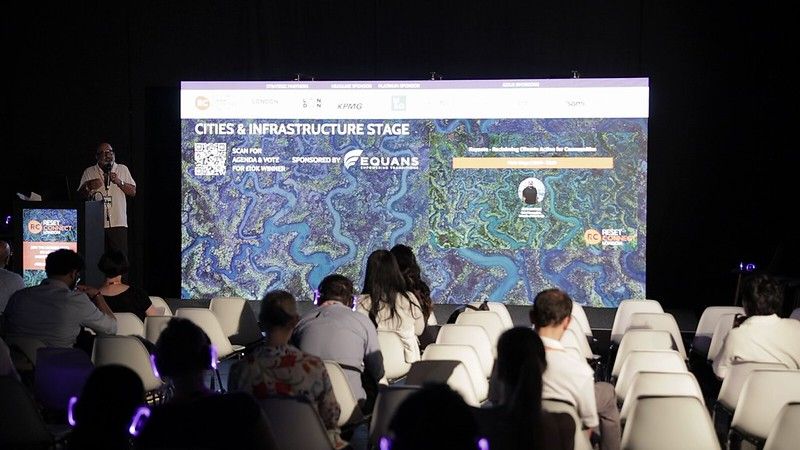
Event — Reset Connect London 2026
Date — Wednesday 24 June 2026
Stage — Main Stage Keynote
Speaker — Asad Rehman, Chief Executive, Friends of the Earth
Estimated read time — 9 minutes
Quick Read Summary
A heatwave can mean a day in an air-conditioned office for one person and a shift on a building site for another. Asad Rehman opened his keynote at Reset Connect London 2026 with that difference. Climate impacts arrive in communities where housing, health, income and access to green space already vary sharply. The Friends of the Earth chief executive argued that building support for climate action means working through those everyday conditions. He drew on environmental mapping, community gardening and local listening exercises to explain why affordability and a say in decisions matter to the transition. His closing argument was about the relationships communities will need as heat, flooding and other pressures grow.
Begin with the conditions people already live in
Rehman asked the audience to consider who could escape the heat outside. Some workers could retreat to cooled buildings or greener streets. Others faced hot flats, factories and warehouses, or worked outdoors because losing a day’s pay was unaffordable. The weather was shared. The resources available to deal with it were distributed very differently. That was his starting point for discussing climate change. Before talking about tonnes of carbon, he wanted the audience to recognise how heat and other impacts interact with existing inequalities. A poorly insulated home can be expensive to keep warm in winter and uncomfortable in summer. A household with little financial room may struggle to recover from a flood even after the water has gone. Rehman’s argument was that people encounter these issues through daily life. Energy bills, the condition of their home, transport access and health affect how they experience a changing climate
and how they assess proposals to respond to it. A plan asking people to change needs to take those conditions seriously. He also linked this to the way climate policy is discussed. Recalling the French yellow vest protests, he described the gap between concern about the end of the world and anxiety about reaching the end of the month. For him, that gap raised questions about who pays, who benefits and who has the authority to decide.
Use environmental evidence to understand unequal exposure
Friends of the Earth’s environmental mapping was Rehman’s next example. He described bringing together information about air pollution, flood risk, extreme heat and access to green space, then considering those exposures alongside deprivation and other social conditions. Looking at those layers together helps explain why some neighbourhoods face several pressures at once. His point was about how to read the map. A location with poor air quality may also have residents with fewer resources to protect their health or change where they live. A neighbourhood with limited greenery may have fewer places to cool down during hot weather. Considering each issue separately can miss how they accumulate in the same households. Flooding illustrated the consequences particularly clearly. Rehman described how a flood could destroy possessions, photographs and savings that a household had little prospect of replacing. He connected that material loss to trust in public institutions. People’s sense that their community will be protected, and helped to recover, can be damaged alongside their home. The implication for local climate work is to ask who is exposed and what capacity they have to respond. An emissions measure can show what a project cuts. Understanding its effects on residents also requires attention to housing, health, income and the public services people can reach.
A greener street can also build local relationships
Rehman pointed to Friends of the Earth’s Postcode Gardeners programme as a way to connect nature recovery with everyday wellbeing. The programme brings gardening support into neighbourhoods and involves residents in improving the spaces around them. In his account, access to green space belonged in the same conversation as health, housing and hardship. A local growing project gives people a practical way to take part. Residents can work together on a place they use, see changes over time and build relationships through the work. That connection matters to the wider argument of the keynote, which returned repeatedly to whether people have a sense of agency in their neighbourhood. Rehman also asked what happens when an area receives investment without an improvement in the circumstances of people already living there. Drawing on his experience of east London, he warned that new development can sit close to severe deprivation. The presence of capital alone tells little about whether existing residents can afford to stay, use the new facilities or benefit from the jobs created. That makes participation and the distribution of benefits questions to address when a project is designed. A nature or regeneration scheme can be assessed through the people it reaches, the costs they face and the opportunities they have to influence it, alongside its physical outputs.
Listen before deciding what a community needs
Rehman described a listening exercise through Friends of the Earth’s local groups, which fed into its Charters of Hope and work on climate and fairness. He said people talked about housing costs, energy bills, unreliable or unaffordable buses, declining high streets and the opportunities available to their children. Those concerns came with attachment to place. Residents wanted the neighbourhoods they loved to become places where they could thrive. Rehman argued that support for change grows when a proposal connects to that ambition and explains how it will improve the conditions people have described. Affordable clean energy was one example. Calling energy clean leaves open questions about its price, ownership and who receives the financial benefit. Housing raises similar questions. A retrofit may improve comfort and energy performance, while residents still need to understand what happens to their bills and the affordability of their home. Rehman therefore asked climate organisations to broaden the conversations they hold with communities. Decisions about transport can also affect access to work. Nature recovery can be connected to health and wellbeing. An energy project can raise questions about who controls an asset and where its income goes. Those relationships give residents more to assess than a promised emissions saving.
Give people a role in shaping the transition
For Rehman, the challenge extended to democratic power. He argued that climate action needs to address whether communities have influence over the changes happening around them. Without that influence, promises of future improvement can be difficult to trust, particularly in places that have experienced industrial decline and weakened services. He spoke about Burnley, where he grew up, and the history of solidarity in a town associated with mines, mills and factories. His account challenged the tendency to describe such places only through what they have lost. He saw relationships and experience within those communities that could help shape a response to present pressures. Rehman linked this to the wider political environment. He argued that economic insecurity can be used to turn people against climate action and against one another. His proposed response was to connect climate, nature and anti-poverty work around changes people could recognise in their lives, including affordable transport, healthier neighbourhoods and greater security. The keynote did not offer a detailed funding or governance model for that transition. It set a test for the organisations trying to deliver it. Can residents see how a project responds to their priorities, and can they influence the choices that determine its effects on them?
Invest in the relationships that help a place cope
In the closing section, Rehman turned to social infrastructure. He asked the audience to think about whether neighbours know and trust one another, whether public institutions function and whether people feel heard. These conditions affect how a community can respond when heat or flooding disrupts daily life. He connected that resilience to housing, health care and social protection, and called for environmental organisations to work more closely with groups addressing poverty and other local needs. A food bank, a community energy project and a school community may reach different people in the same area. Relationships between them can help organisations understand needs they would miss on their own. Rehman described Friends of the Earth’s commitment to deeper community organising and asked how existing local activity could reach more people with support from government. The final emphasis was on giving residents a way to act together and a reason to believe their neighbourhood has a future they can help shape.
Questions for organisations working with communities
The following questions translate the keynote’s argument into project planning. They are editorial prompts based on the session.
Questions to ask
Who has described the problem this project is intended to solve? Which residents face the greatest costs or exposure? How will participants influence the decisions that affect them? Where will the financial and practical benefits go?
Signals to watch
Look for residents’ priorities changing the project design, clear explanations of costs and benefits, and sustained relationships between local organisations. For a green space or energy project, record who can access it and whether participation continues beyond the launch.
Traps to avoid
A consultation held after the main decisions have been made gives residents little influence. New investment can also leave existing hardship untouched. An environmental output needs to be considered alongside whether residents can afford, access and shape the improvement.
Key Takeaways
Climate impacts interact with existing inequalities in housing, income, health and access to nature. Environmental mapping can help show where several pressures affect the same communities. Affordability and local influence were central to Rehman’s case for building support for change. Rehman called for stronger connections between climate organisations and groups working on everyday community needs.
Quote of the Session
“These transitions will only succeed if the people can see themselves in it.”
Asad Rehman, Chief Executive, Friends of the Earth
Final Thoughts
Rehman asked the audience to judge climate action partly through what residents will experience. A greener street, better transport or an energy project has to connect with people’s ability to live well in their neighbourhood. Understanding that connection starts with listening and continues through the decisions about cost, ownership and access. His closing emphasis on community organising followed from that argument. People need relationships and institutions they can rely on as climate pressures increase, and opportunities to shape the response. For organisations working locally, those are part of the work of making a transition happen.
Speakers
Asad Rehman, Chief Executive, Friends of the Earth. Rehman delivered this keynote on the connections between climate impacts, nature loss and inequality. He described the organisation’s environmental justice mapping, Postcode Gardeners programme and work with local groups. His contribution centred on affordability, democratic participation and community organising.
Watch Full Session